What I Actually Do During the Slow Weeks (It's Not Nothing)
August has a reputation as the dead month. It isn't dead — it's when the unglamorous work that never happens during a busy quarter finally gets done.
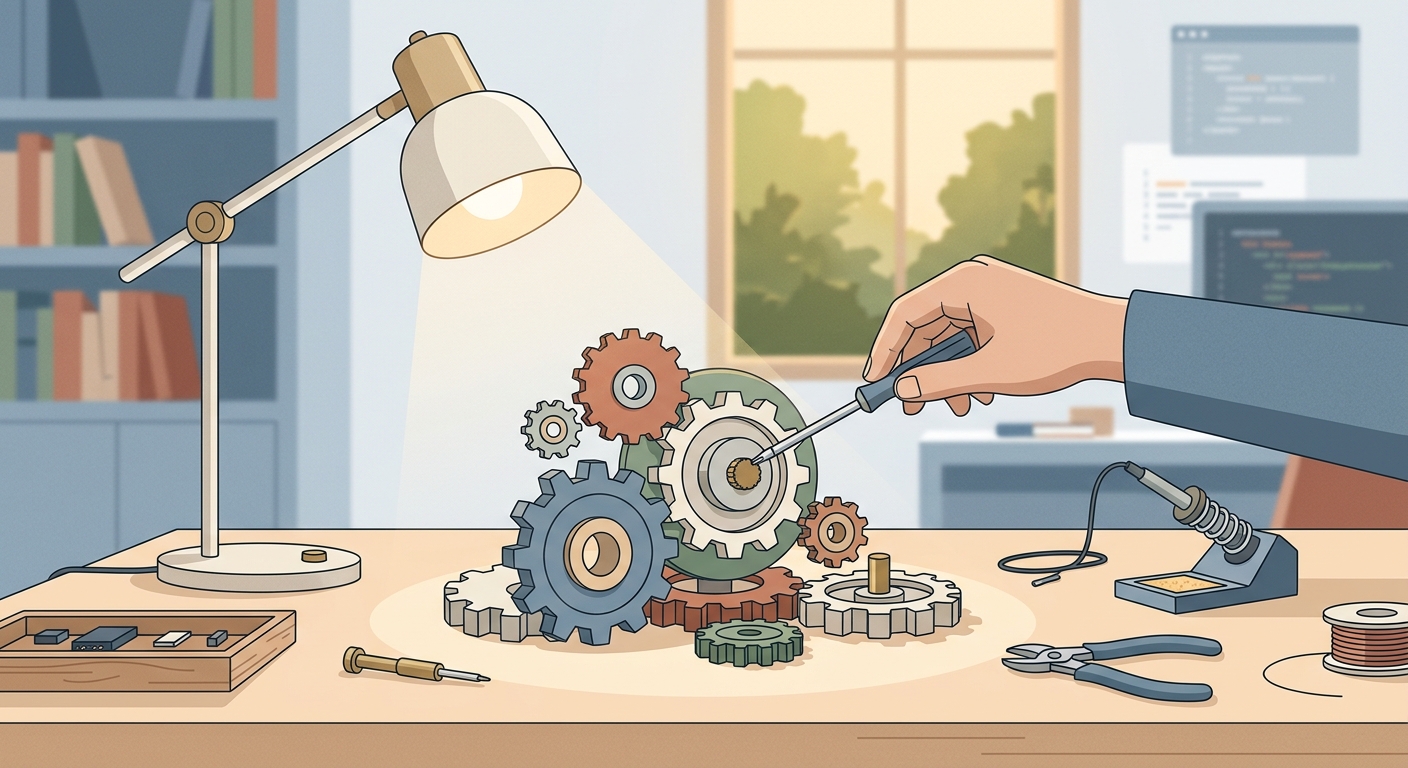
Every August, someone asks what I've been shipping lately, and the honest answer is usually "nothing you'd notice." No feature launches, no new product announcements, nothing that shows up in a changelog anyone reads. That reads as dead time from the outside. It isn't. It's the only time of year the unglamorous work actually gets done.
The Backlog That Only Moves When Nothing's on Fire
Across eight products, there's a permanent list of things that are fine, technically, but not right. A Lambda scraper in Dealery that retries too aggressively and occasionally gets rate-limited. A Capacitor plugin gap in Game Night that's been worked around instead of fixed. Dependency versions frozen since whenever the last deadline made upgrading feel too risky. None of this is urgent. All of it is real. During a normal month, urgent always wins, so this list only ever grows. In August, with fewer feature requests and fewer seasonal deadlines competing for attention, it's the first time in months I can actually clear line items instead of just adding to them.
This month specifically: I finally went back and fixed a notification-routing bug in the tooling that runs this exact blog pipeline — something that had been quietly misfiring for weeks because it was never quite bad enough to stop everything else and fix. That's the shape of slow-week work. Not glamorous. Overdue.
Refactors I Wouldn't Risk in a Busy Quarter
There's a category of change that's clearly correct in the long run and clearly risky in the short run — the kind where you're touching shared code across multiple products and a mistake doesn't show up until three weeks later in a place you weren't looking. I don't make those changes in June or during a launch push. I make them now, when there's slack in the schedule to actually watch for regressions instead of shipping and hoping.
This year that meant consolidating some duplicated auth logic that had drifted slightly different across two of the products, and finally standardizing how a couple of the Capacitor apps handle background task permissions instead of each one having its own slightly different workaround. Neither of those will ever get a blog post of its own. Both of them make the next six months of actual feature work faster.
Reading Old Code With Fresh Eyes
Slow weeks are also when I go back and read code I wrote eighteen months ago without the pressure of a deadline attached to it. Some of it holds up. Some of it is clearly the work of someone who was moving faster than they were thinking. I don't always fix what I find — sometimes the fix costs more than the problem — but I make notes, and having the actual time to sit with old decisions instead of skimming past them is a genuinely different kind of thinking than shipping-mode thinking.
Why This Doesn't Feel Like Wasted Time
The honest version of "slow week" isn't rest, and it isn't idle. It's the studio running on a different clock — one where the deliverable is fewer bugs in October instead of a feature this week. That trade is easy to make when nobody's asking for the feature this week. It's much harder to make in March, which is exactly why it has to happen now. If August looks quiet from the outside, that's the point. The busy months are when you find out whether the quiet ones were used well.